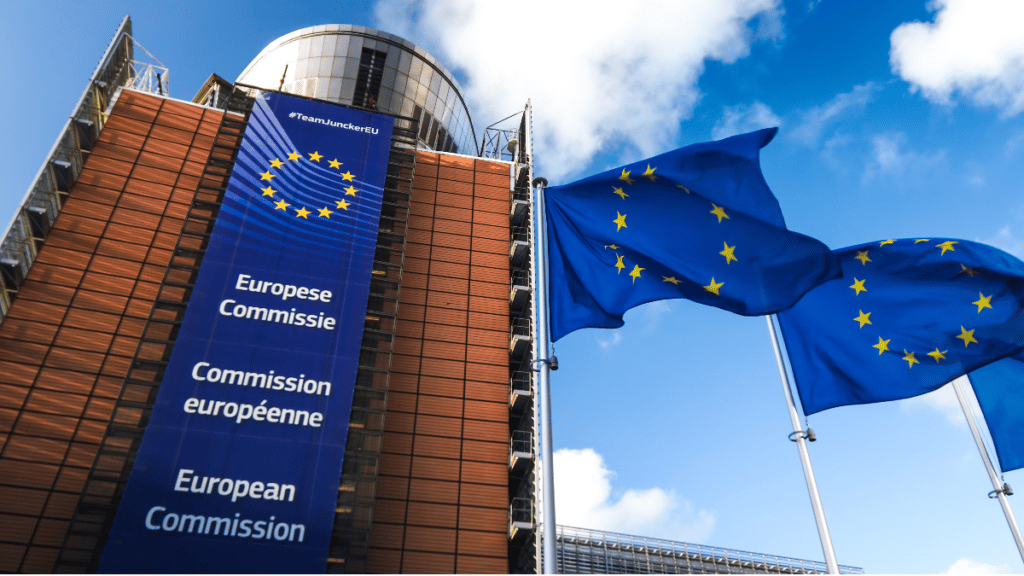
On March 4, the European Commission introduced ‘Made in EU’ and low-carbon requirements for public procurement in a proposed new regulation, the Industrial Accelerator Act (IAA), with the aim of increasing demand for low-carbon, European-made technologies and products. It focuses on energy intensive industries, namely steel, cement, and aluminum, as well as the automotive value chain and net-zero technologies. The proposed regulation will also apply to foreign investments over €100 million in strategic sectors for investors from third countries that control more than 40% of global manufacturing capacity in the sector. This post examines the public procurement requirements in the proposed IAA, including their application to foreign suppliers whose home jurisdictions provide reciprocal access to EU products and suppliers under international agreements.
The proposed regulation fulfills a political commitment made by Commission President von der Leyen in the 2025 State of the Union Address, in which she announced the IAA to boost demand for clean and “Made in EU” products in strategic sectors.
Public procurement requirements: The proposed IAA introduces mandatory ‘Union origin’ and low carbon requirements for public procurement in specified strategic sectors, including the energy-intensive steel, cement and aluminum sectors, the automotive sector, and net-zero technologies, with the potential extension to other energy-intensive sectors such as chemicals. Rather than applying a single uniform “European content” threshold across all sectors, the IAA tailors requirements for each sector. The Union-origin and low carbon thresholds for public procurement, which will be applied from January 1, 2029, include: (i) at least 25% of steel used in buildings, infrastructure, and motor vehicles must be low-carbon; (ii) at least 5% of the concrete and mortar used in buildings and infrastructure must be of EU origin and low-carbon; and (iii) at least 25% of the aluminum used in buildings, infrastructure, and motor vehicles must be EU-origin and low-carbon. ‘Union origin” is based on the location of production.
In addition, the planned IAA introduces detailed ‘Made in EU’ provisions for electric vehicles and their components. They include requirements for assembly in the EU, at least 70% of vehicle components (excluding battery) of EU origin by value, and additional requirements for battery cells, e-powertrain components and electronic systems.
The proposed regulation also introduces ‘Made in EU’ requirements for public procurement of net-zero technologies (batteries, battery energy storage systems, solar photovoltaic technologies, heat pumps, wind technologies, electrolysers, and nuclear fisson energy technologies). These requirements, which will be phased in over one to six years depending on the technology, specify that a certain share of products and their main components must originate in the EU.
Exceptions: Contracting entities do not need to apply the Union-origin and oow-carbon requirements for energy intensive industries where: (i) the required products or services can only be supplied by one specific economic operator, and no reasonable alternative or substitute exists; (ii) no suitable tenders or requests to participate were submitted; (iii) their application would require a contracting entity to acquire goods, services, or works having disproportionate costs (exceeding 25%) or would result in technical incompatibility in their operation and maintenance.
Implementation of procurement restrictions: While the proposed IAA establishes the framework for what ‘Made in Europe’ procurement entails for energy-intensive industrial products, net-zero technologies, and automotive components, howsuch procurement is to be carried out will be clarified in the revision of the public procurement directives, which is currently underway.
Third countries and ‘Union-origin’ mandate: Under the IAA, as proposed, contracting entities must exclude from access to procurement suppliers owned or controlled by an entity established in third countries that have not concluded an international agreement with the EU guaranteeing such access. However, it provides for “Union-origin” status to be given to suppliers from countries that are parties to the WTO Government Procurement Agreement (GPA) or an agreement with the EU that establishes a free trade area or a customs union if they provide reciprocal access.. Suppliers established in those countries will be given equal treatment in procurement subject to the IAA’s mandates, provided they have rights to participate in that procurement and their home country provides equivalent access to EU suppliers in its procurement.
However, the Commission can withdraw this access if the third country has failed to provide national treatment to EU products or entities under the relevant agreement, dependencies or other development threaten EU security of supply for the product in question, or an exclusion is based on a security or exceptions provided by the applicable agreement.
Under the GPA, the United States and the EU have exchanged commitments relating to procurement by central government entities, subcentral entities, public utilities, and other entities. While the US has generally broad access to central government procurement covered by the EU under the GPA, its access to procurement by subcentral entities and public utilities in the EU is more limited. Based on its approach to reciprocity, the EU does not provide the US with rights to participate in all the procurement of its subcentral entities and utilities because the US provides more limited coverage of those entities and maintains a variety of restrictions.
Next steps: Before the proposed regulation can enter into force, it will have to be approved by the European Parliament and the Council of the EU (comprised of members states), which is not expected before mid/late 2027.
The EU’s planned adoption of ‘Made in EU’ preferences follows Canada’s recent implementation of “Buy Canadian” policies. It remains to be seen whether other GPA parties will enact their own preferences.
Jean Heilman Grier
March 12, 2026
Related Post