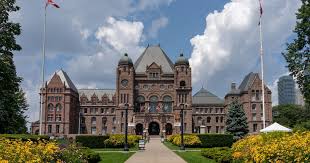
Canada continues to expand its protection of domestic goods and services in government procurement. Following the federal government’s application of ‘Buy Canadian’ policies in December 2025, its leading province of Ontario began implementing its own ‘Buy Ontario’ mandates in April 2026 under the Buy Ontario Act (Public Sector Procurement), 2025. It requires preferences to be given to Ontario and Canadian goods and services in procurement across the public sector. In addition, procurements for capital infrastructure and fleet vehicles must meet domestic content requirements. This post outlines the provincial and municipal procurement directives that implement the Act.
On April 13, 2026, the Government of Ontario began applying provincial and municipal procurement directives under the Buy Ontario Act that set out the requirements for public sector entities to prioritize Ontario and Canadian goods and services in their procurement.
The provincial Buy Ontario Procurement Directive (Provincial Directive) incorporates related initiatives, namely the Restrictive Procurement Policy, a Building Ontario Businesses Initiative, and two strategic categories (capital infrastructure and fleet vehicles) into a single directive. That directive governs how public-sector purchasers must give preferences to Ontario- and Canadian-based suppliers and goods.
The Restrictive Procurement Policy was adopted by the province in March 2025 in response to the Trump administration’s imposition of tariffs on Canadian goods, as described in a prior post. Under that policy, Ontario has significantly restricted the ability of US-based or US-controlled businesses to bid on its public sector contracts. Procuring from a US business is permitted if it is the only viable source and the procurement cannot be delayed or the US business commits—in service procurements—to having at least 90% of required staff located in Canada. This policy applies to all procurements of goods and services at any value.
Under the Provincial Directive, entities are required to apply the Building Ontario Businesses Initiative (BOBI) to all procurements of goods and services, except for fleet vehicles and capital infrastructure. Under BOBI, government and other covered entities must give preferences to Ontario and Canadian businesses below specified procurement thresholds. For procurement exceeding the applicable thresholds in trade agreements, entities must also give preferences to bidders from Ontario’s trading partners.
The Provincial Directive also introduced mandatory requirements in two strategic procurement categories: (i) fleet vehicles,including obligations to purchase or lease Ontario-made vehicles or vehicles from Ontario producers; and (ii) capitalinfrastructure projects, which are broadly defined and for which the Directive establishes preferences for Ontario-orCanada-based suppliers and for domestically sourced goods and services.
The provincial-level directive applies to all government entities, including all ministries and provincial agencies, Ontario Power Generation Inc. and its subsidiaries, the Independent Electricity System Operator, and designated public sector organizations (such as hospitals, school boards, universities). No entities are exempt; however, an exception is provided for emergencies.
Fleet Vehicles: The requirements for fleet vehicle purchases apply to all procurements of new light-duty passenger vehicles with certain exceptions, such as short-term leases and specialty or modified vehicles. Government and other covered entities must purchase or lease made-in-Ontario vehicles, regardless of value. If Ontario-made vehicles are unavailable or operationally infeasible, entities must purchase or lease a vehicle from an Ontario Vehicle Producer. Only if neither option is available are alternative acquisition strategies permitted.
Capital infrastructure: The Directive subjects all capital infrastructure procurement (with certain exceptions) to additional restrictions. Procuring entities must identify each major good and service required for the work and require bidders to submit a Domestic Supply Chain Plan (DSCP) that identifies the source of each of the major goods and services. In assessing the DSCP, entities may use an evaluation approach that applies a 10% evaluation advantage to bidders with the highest proportion of Ontario- or Canadian-sourced content or a commitment approach that requires vendors to commit to a mandatory eligibility requirement to meet or exceed a specified proportion of Ontario- or Canadian-made goods and services. Other alternative approaches are also available. A value-for-money exclusion may be used if compliance could increase costs by 25% or more.
Entities may also apply weighted domestic criteria to assess how vendors meet Ontario’s environmental and labor standards. Where they are applied, those criteria may account for up to 35% of the overall evaluation weighting.
The Municipal Buy Ontario Procurement Directive mirrors the requirements under the Provincial Directive regarding capital infrastructure and fleet vehicles. It also extends the scope of the Act’s procurement requirements to all municipalities, local boards, and prescribed municipal services corporations. Similar to the Provincial Directive, the Municipal Directive provides an exception for procurements needed to address a situation that is urgent and unforeseen and does not prevail over legislation.
For capital infrastructure procurements, the Municipal Directive does not require the application of weighted domestic criteria for procurement above C$368,000. It also provides additional flexibility for approval of alternate procurement methods, provided they are consistent with the overall objectives of the Directive and the value-for-money exclusion.
Jean Heilman Grier
May 11, 2026
Related Posts
Canada Embraces “Buy Canadian” Procurement Policies
Key International Procurement Developments in 2025
Posts on Canada’s Implementation of Procurement Restrictions