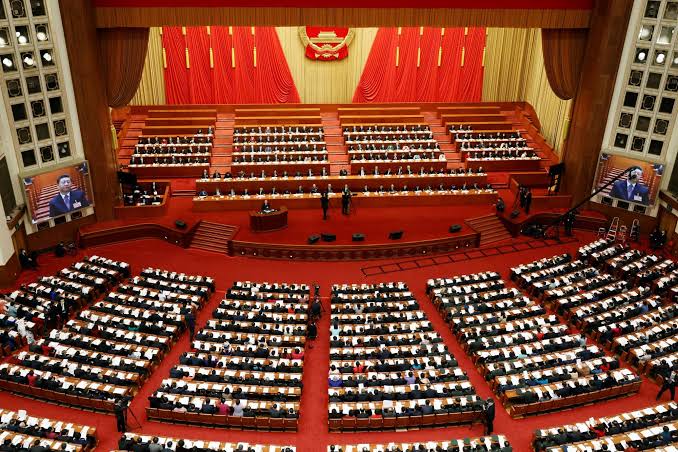
Since 2020, the Chinese government has proposed revisions of its two main government procurement laws: the Government Procurement Law (GPL) and the Tendering and Bidding Law (TBL). That reform process has now moved to China’s National People’s Congress (NPC), its national legislature. In June, after deliberations by the NPC Standing Committee, the NPC publicly solicited comments on the Bidding Law of the People’s Republic of China (Draft Revision) and the Government Procurement Law of the People’s Republic of China (Draft Revision). The deadline for submitting comments is July 25, 2026. The overall aims of the revisions are to enhance transparency and reduce corruption. This post highlights issues in the proposed revisions of particular interest to foreign suppliers.
The Government Procurement Law, which was adopted in 2003 and revised in 2014, is China’s primary government procurement law that applies to the conduct of procurement of goods, services, and works by all levels of the Chinese government. The Ministry of Finance, which oversees the GPL’s implementation, proposed revisions of the law in 2020 and 2022.
The second law, the Tendering and Bidding Law, which was implemented in 2000 and revised in 2017, imposes uniform tendering and bidding procedures on certain classes of procurement projects in China, notably construction and works projects, without regard to the type of entity that conducts the procurement. It is considered the de facto law that applies to procurement by state-owned enterprises. The National Development and Reform Commission, which is responsible for its implementation, proposed a TBL revision in 2020.
For more than 20 years, the GPL and the TBL have operated in parallel, However, their overlapping scope and inconsistent standards have long created uncertainty for market participants. It is hoped that the current revision of the two laws at the same time will “help settle “the long-blurry boundary” between them and reduce compliance uncertainty for businesses operating in China’s public procurement market. The draft revisions “aim to draw a clearer line between the two regimes and unify rules across the full project lifecycle.” Nonetheless, the proposed GPL in Article 4 carries forward the current provision that the TBL applies where government procurement of works involves the tendering and bidding process.
Comprising 104 articles across 10 chapters, the aims of the draft GPL revision are “to improve the government procurement system and provide legal support for building a unified national market through better-aligned rules and institutions.” It will also enable China to reinforce oversight and anti-corruption measures in government procurement. The draft GPL includes a digital chapter mandating full-process electronic transactions and complete documentation of procurement activities.
The TBL draft, consisting of 79 articles in six chapters, “aims to improve the long-term management mechanism for the tendering and bidding sector,” strengthen oversight in the sector, and reduce corruption. It also adds requirements that projects subject to mandatory bidding publish bidding plans and disclose bid winners, bid award methods, and the main reasons for selecting the winning bidders.
A mandate to guarantee equal participation is touted as one of the core elements of the overhaul of the procurement laws, with procuring entities banned from imposing discriminatory conditions on government suppliers. Purchasing entities are required to guarantee “equal participation” to all business entities and are barred from illegally restricting or obstructing suppliers from entering a local or sectoral procurement market. However, the draft GPL also gives the government the power to ban suppliers “legally restricted or prohibited” from bidding.
In addition, the proposed revision of the GPL, like the current law, requires procuring entities to prioritize the procurement of domestic goods, works, and services, with certain exceptions: they cannot be obtained within China or under reasonable commercial terms, the procurement is intended for use outside of China, or as otherwise provided by other laws or administrative regulations.
The draft further provides that the definition of domestic goods, works, and services must be implemented in accordance with relevant regulations of the State Council. That refers to the domestic product standards and related government procurement policies that the State Council issued in September 2025. They define domestic product for purposes of government procurement and provide a 20% price evaluation advantage for qualifying domestic products.
“A critical unresolved issue” is how ‘Made in China’ will ultimately be defined, as it will determine eligibility for procurement preferences. Although the State Council introduced a framework for defining “domestic products,” it provided for the development of detailed product-level criteria, such as local content thresholds and requirements for key components, over the next five years, with a three- to five-year transition period.
The draft GPA (Article 5) also requires government procurement to “implement the guidelines, policies, decisions, and arrangements of the Party and the State, and serve the realization of national economic and social development policy goals, including promoting the development of small and medium-sized enterprises ….” One means of implementing this requirement could be by “reserving procurement shares,” as provided in the proposed Article 28.
While the adoption of updated procurement laws should improve China’s procurement system, how it will affect foreign businesses participating in China’s government procurement will need to be carefully monitored. It is anticipated that the revised GPL and TBL will be adopted by the NPC by the end of 2026.
Jean Heilman Grier
July 15, 2026
Related Posts